
Talent Trends Report - August 2026
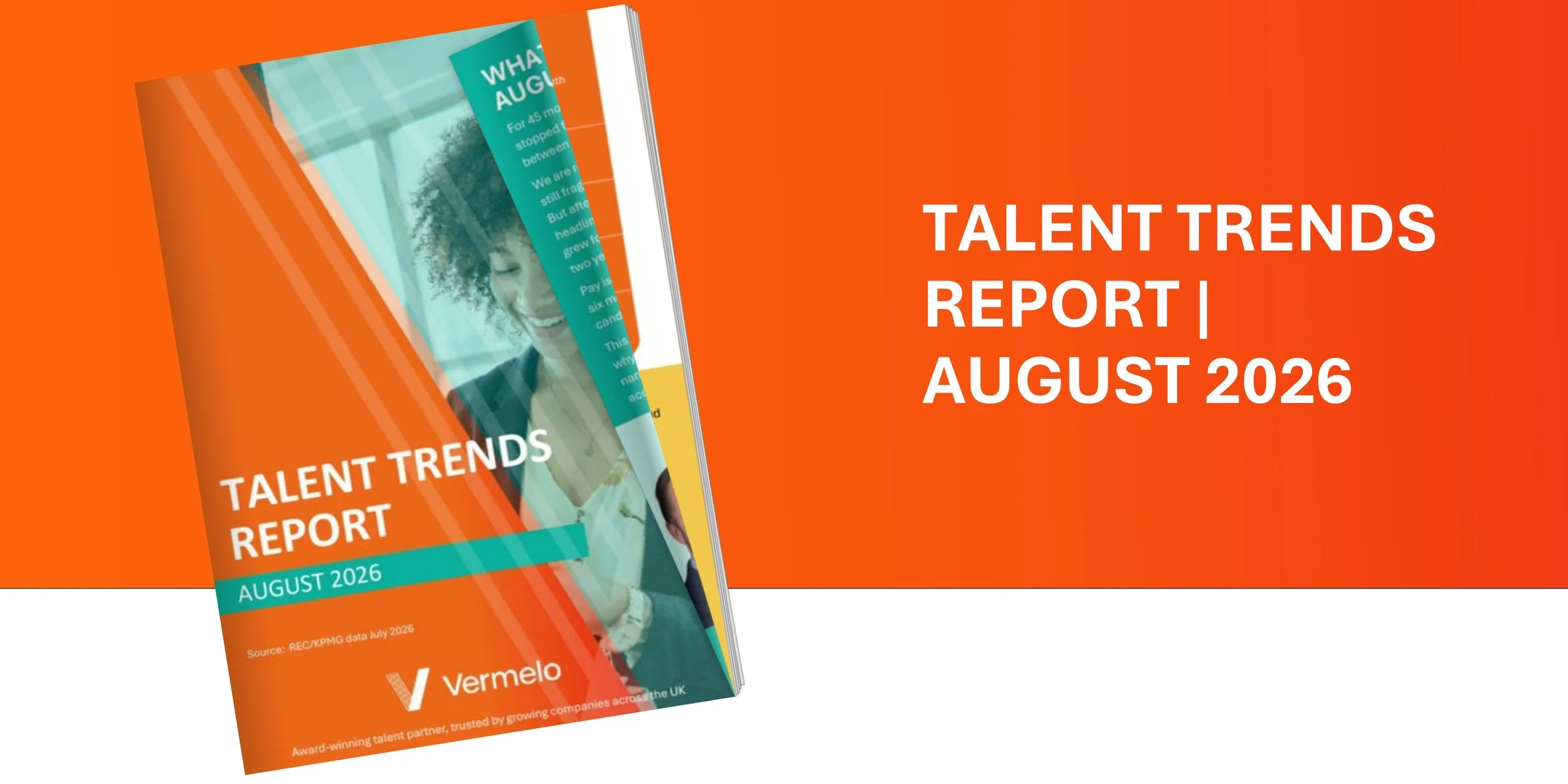
For 45 months, one line in the REC’s monthly survey pointed the same way: down. The July figures show it stopped.
That is genuinely worth noticing. It is also where most commentary gets ahead of itself. Permanent placements reaching the no-change mark means the decline has ended — not that growth has begun. Those are different markets, and they call for different decisions.
What July’s data does show, fairly clearly, is that employers are moving again. Just not in the way most workforce plans assume.
What July’s data shows
From the KPMG and REC UK Report on Jobs (July 2026 data):
Permanent placements reached 50.0 — the no-change mark, and the first month without decline since October 2022
Temporary billings grew for a fourth consecutive month, with the North of England strongest
Temporary vacancies rose for the first time in two years, at the quickest rate since August 2023
Total vacancies fell at their slowest rate in 22 months
Starting salaries rose at their fastest pace in six months, sharpest in London
Temp pay growth hit a 26-month high
Candidate availability increased for a 41st consecutive month
Alongside that, the ONS reported around 712,000 vacancies, unemployment at 4.9%, employment at 75.1% and annual earnings growth of 4.3%.
The part the headlines miss
Read those figures quickly and they look contradictory. Permanent hiring has stopped falling, but candidate availability keeps climbing. Employers are cautious, but pay is rising at its fastest in six months. Vacancies are still falling, yet temporary vacancies have started to grow.
They aren’t contradictory. They are the fingerprint of a particular kind of restart - one where flexible capacity moves first, permanent hiring follows role by role and pay reprices quietly in the skills that stayed scarce throughout the downturn.
Which means the useful question for the next two quarters isn’t whether the market is recovering. It’s whether your workforce mix is one you chose or one you ended up with by default after three years of headcount freezes and case-by-case exceptions.
That distinction is the subject of this month’s report.
Inside the August Talent Trends report
Five numbers from July’s data that are widely misread — and what they actually signal
How a hiring restart typically sequences, and where the market sits in that sequence right now
The two-speed workforce: why permanent and flexible hiring have decoupled, and what that means for planning
Six decisions worth making before hiring reopens properly — none of which commit you to a hire
The difference between the workforce you drift into and the one you decide on
Where RPO, embedded talent (RaaS), MSP and talent advisory fit against each of those decisions
Twelve pages. Written for people who have to plan, not just observe.
Who the report for
HR and talent directors, resourcing leads and procurement teams responsible for hiring capacity - particularly in insurance, financial services and other regulated or complex sectors, where the flexible-to-permanent balance carries compliance weight as well as commercial weight.
Get the report
If you’d rather talk it through than read it, get in touch - we’re happy to look at your current mix and tell you what we’re seeing for comparable organisations.
01892 553360 | info@VermeloRPO.com
FAQs
Has UK permanent hiring started growing again?
Not yet. In July 2026, permanent placements reached the no-change mark of 50.0 — meaning the decline stopped rather than reversed. It was the first month without a fall since October 2022, ending a 45-month run.
Why are UK employers hiring temporary staff before permanent staff?
Flexible capacity lets organisations restart delayed work without committing to permanent headcount while confidence is still uncertain. July’s data showed a fourth straight month of temporary billings growth and the first rise in temporary vacancies in two years.
Are UK starting salaries rising in 2026?
Yes. July 2026 saw starting salaries rise at their fastest rate in six months, with London sharpest, and temp pay growth at a 26-month high - despite candidate availability rising for a 41st consecutive month.
How many job vacancies are there in the UK?
The ONS reported approximately 712,000 vacancies, with unemployment at 4.9% and employment at 75.1%.